Attic Spray Foam Insulation
A properly sealed, conditioned attic is one of the biggest things a Pinetop-Lakeside home can do to stop heat loss, ice-dam risk, and high winter heating bills at roughly 6,800-7,200 feet.
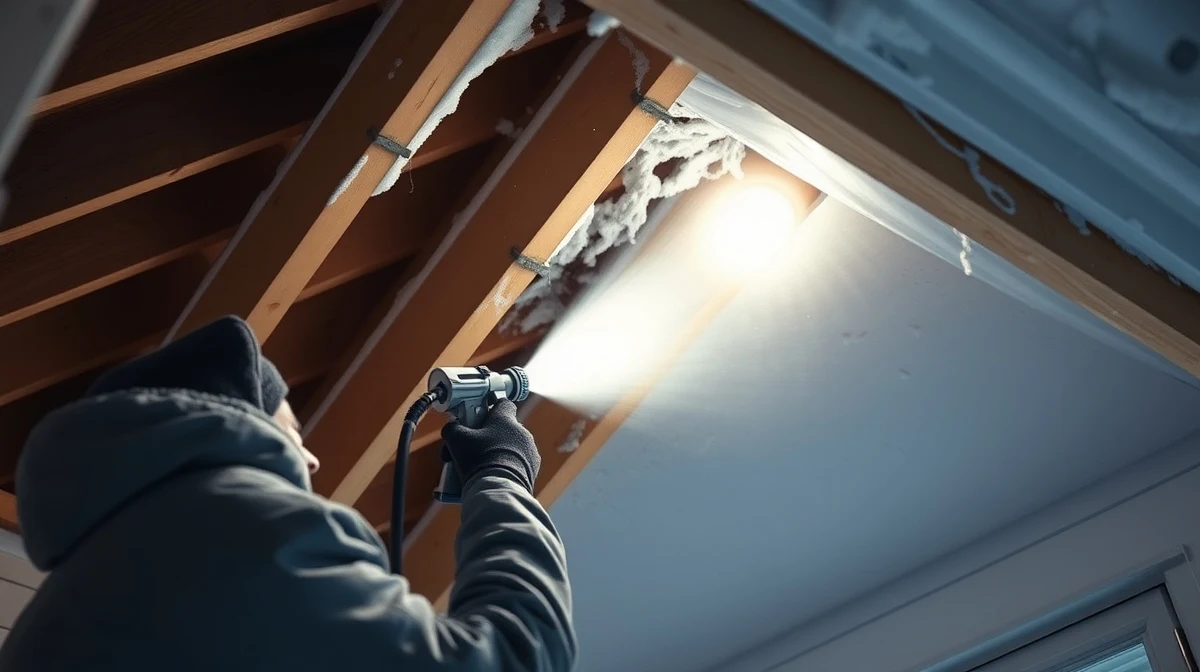
At Pinetop-Lakeside's elevation in IECC Climate Zone 5B, attics take on a different job than attics almost anywhere else in Arizona. The White Mountains see a real winter snow season most years, and a vented attic sitting under a leaky ceiling plane doesn't just waste heat — it actively raises ice-dam risk. Warm air escapes upward through can lights, top plates, plumbing chases, and attic hatches, warms the underside of the roof deck, melts snow sitting on it unevenly, and sends that meltwater toward the colder eave overhang, where it can refreeze and back up under the roofing. Fiberglass batts and blown cellulose slow heat transfer somewhat, but neither one stops the air movement that actually drives the melt-refreeze cycle, and both lose real-world performance to air gaps, compression, and settling over time.
Spray foam insulation solves this differently because it insulates and air-seals the attic in a single application, closing off the gaps and penetrations that let conditioned house air reach the roof deck in the first place. For many Pinetop-Lakeside homes we recommend converting the attic to a conditioned, unvented assembly by applying closed-cell or a closed-cell/open-cell combination directly to the underside of the roof deck, bringing the entire attic inside the home's thermal and air-sealing envelope. That approach targets an R-49 to R-60 attic assembly appropriate to this elevation, keeps the roof deck temperature more consistent so snow melts more evenly, and cuts the heat loss that drives up winter heating bills all season long.
Why homeowners choose it
- Seals the air leaks that let warm house air reach the roof deck, addressing a root cause of ice-dam risk instead of just treating the symptom.
- Converts a vented attic into a conditioned, unvented assembly that targets a strong R-49 to R-60 range appropriate for Pinetop-Lakeside's elevation.
- Reduces winter heat loss through the ceiling plane, which lowers heating costs through a genuine White Mountains cold season.
- Keeps ductwork and mechanical equipment inside the conditioned envelope instead of exposed to sub-freezing attic temperatures.
- Won't settle, sag, or lose R-value over time the way blown cellulose and fiberglass batts commonly do in real attic conditions.
- Reduces attic moisture problems tied to melting snow and condensation by controlling both air movement and temperature at the roof deck.
How Roof-Deck Sealing Reduces Ice-Dam Risk at the Source
Ice dams aren't purely a roofing problem — they're an attic-heat-loss problem that shows up on the roof. In a typical vented attic, warm air constantly leaks up from the living space below through recessed lighting, bath fan housings, attic hatches, top plates, and plumbing and wiring penetrations. That air warms the roof sheathing from underneath, melting the bottom layer of snow sitting on the shingles even while outside air stays well below freezing. The meltwater runs down the roof slope until it reaches the eave overhang, which sits over unheated space and stays colder, and can refreeze there. Each cycle adds to the buildup, and trapped water can work back up under the shingles and into the roof deck, fascia, and ceiling below.
Sealing the attic with spray foam applied directly to the underside of the roof deck reduces that mechanism substantially. Once the roof deck is inside the conditioned, air-sealed envelope, its surface temperature tracks much closer to outdoor air temperature instead of getting artificially warmed from below. Snow on the roof melts more evenly from sun exposure and ambient temperature rather than from attic heat leaking through, so there's far less meltwater reaching the eaves to refreeze in the first place. This is the same building-science approach used across other cold, seasonal-snow climates, and it's the reason we lead with attic sealing as the primary ice-dam-risk fix rather than reactive measures.
- Warm attic air melts roof snow from below, even in freezing outdoor temperatures
- Meltwater can refreeze at the colder eave overhang, building ice layer by layer
- Trapped water can back up under shingles into the roof deck and ceiling below
- Roof-deck spray foam keeps the deck temperature closer to outdoor air, cutting uneven melt
- Addresses a root cause of ice-dam risk rather than just heat cables or manual roof raking
Sizing Attic Insulation for Pinetop-Lakeside's Elevation
A cold-climate assembly at Pinetop-Lakeside's roughly 6,800 to 7,200 feet should generally target attic insulation in the R-49 to R-60 range, noticeably higher than what's typical in lower-elevation desert Arizona, because a genuine cold, four-season winter at this elevation loses heat differently than a Phoenix attic ever does. Closed-cell spray foam delivers roughly R-6 to R-7 per inch, so a roof-deck application can reach that target in a fraction of the depth that loose-fill fiberglass or cellulose would need, while also air-sealing the assembly at the same time. On many projects we combine a closed-cell base layer against the roof deck for air-sealing and moisture control with open-cell foam filling out the remaining cavity depth for cost-effective R-value, sized to hit the full target range for the specific roof assembly.
For homes that keep a vented attic rather than converting to a conditioned one, we apply spray foam at the attic floor and ceiling plane instead, sealing every penetration, top plate, and hatch before adding insulation depth to reach the same R-value target. Either approach is evaluated on-site, because the right assembly depends on roof framing, existing ventilation, ductwork location, and whether a full roof-deck conversion or a ceiling-plane approach makes more sense for that specific attic.
- Closed-cell spray foam delivers roughly R-6 to R-7 per inch of coverage
- Roof-deck conversion brings ductwork and mechanicals inside the conditioned envelope
- Combination closed-cell/open-cell assemblies balance air-sealing with cost-effective R-value
- Ceiling-plane sealing is the right call for attics that stay vented
- Every attic gets an on-site assessment before we recommend an assembly
What to Expect From an Attic Spray Foam Project
Most attic projects start with an on-site walkthrough where we look at the existing insulation, roof framing, ventilation setup, ductwork, and any specific problem areas like recurring ice buildup or cold rooms below the attic. From there we scope whether a full roof-deck conversion to a conditioned attic makes sense or whether a ceiling-plane air-seal-and-insulate approach is the better fit, and give a firm quote based on square footage and target R-value rather than a rough estimate.
Installation is typically a one- to two-day job for an average Pinetop-Lakeside attic, depending on size and whether we're removing failed existing insulation first. We protect the work area, seal off penetrations and can lights, and apply the foam in controlled lifts to the specified thickness, then do a final walkthrough to confirm coverage and depth before wrapping up. Because spray foam cures in place and doesn't settle or shift, the R-value and air-seal you get on install day is the same one you have years later.
Ideal for
- Homeowners who see icicles, ice buildup, or water staining along the eaves and gutter line most winters
- Older White Mountains homes and cabins with original fiberglass or cellulose attic insulation and visible drafts near the ceiling
- Homes with ductwork or an HVAC air handler located in the attic, where heat loss and freeze risk compound each other
- Anyone remodeling a roof or re-decking who wants to correct attic performance while it's already opened up
- Property owners chasing high winter heating bills who haven't been able to pin down where the heat is going
What affects the cost
Attic Insulation questions, answered
It significantly reduces the risk. Ice dams form when warm attic air melts roof snow from underneath, and that meltwater can refreeze at the colder eave. Sealing the attic with spray foam stops that warm air from reaching the roof deck in the first place, which addresses a root cause instead of just reacting to ice once it's already formed.
At roughly 6,800 to 7,200 feet in IECC Climate Zone 5B, attic insulation in the R-49 to R-60 range is the industry-standard target for a genuine cold-climate assembly, well above what's typical in lower-elevation desert Arizona. We size the foam thickness and assembly to hit that target based on your specific roof and attic setup during the on-site assessment.
It depends on the roof framing, ductwork location, and existing ventilation. Converting to a conditioned, unvented attic with roof-deck foam is often the strongest heat-loss and ice-dam-risk fix, but a properly air-sealed ceiling-plane approach is the right call for some homes. We evaluate both during your assessment and recommend what fits your attic.
Spray foam is applied to the roof deck or ceiling plane and doesn't add meaningful weight that would affect snow-load capacity. If we convert to a conditioned attic, we address any existing ridge or soffit vents as part of the assembly change so the roof still performs correctly.
Attic projects here typically run in the $2,500 to $7,500 range depending on square footage, target R-value, and whether existing insulation needs removal first. We give a firm number after an on-site assessment rather than a rough guess over the phone.
Attic Insulation done right, by a local Pinetop-Lakeside crew
Attic Insulation isn't a commodity — the result depends entirely on how carefully it's planned and installed for your specific home or cabin and Pinetop-Lakeside's real high-country climate. We assess what your property actually needs, prep and air-seal properly, and install to your elevation-appropriate R-value target, so the work delivers the comfort and savings it's supposed to.
We serve Pinetop-Lakeside, Show Low, Linden, McNary, Hon-Dah/Whiteriver, Pinedale, Heber-Overgaard, Greer, and Eagar/Springerville. Every job starts with a free, no-pressure quote.
Just as important, we treat your home or cabin like the system it is. Insulation, air sealing, and ventilation all interact, and getting one right while ignoring the others leaves comfort and savings on the table. When we scope your attic insulation, we look at how it fits the whole picture — so the finished result performs the way it should, holds up through a genuine White Mountains winter, and actually lowers the bills you feel every month.
Free assessment
We evaluate your home or cabin and give you a clear, itemized quote.
Expert install
We prep, air seal, and install your attic insulation to spec — clean and on schedule.
Savings you can feel
A warmer home, lower heating bills, and honest advice about what your property needs.
Related services
Ready for a free attic insulation quote?
Tell us about your home and we'll put together a clear, no-pressure spray foam insulation quote — built for Pinetop-Lakeside's real winters.