Open-Cell Spray Foam Insulation
A soft, expansive foam that fills every stud and rafter cavity to cut drafts and noise transfer inside Pinetop-Lakeside homes and cabins — the right call for interior walls and conditioned attic spaces where moisture exposure isn't a concern.
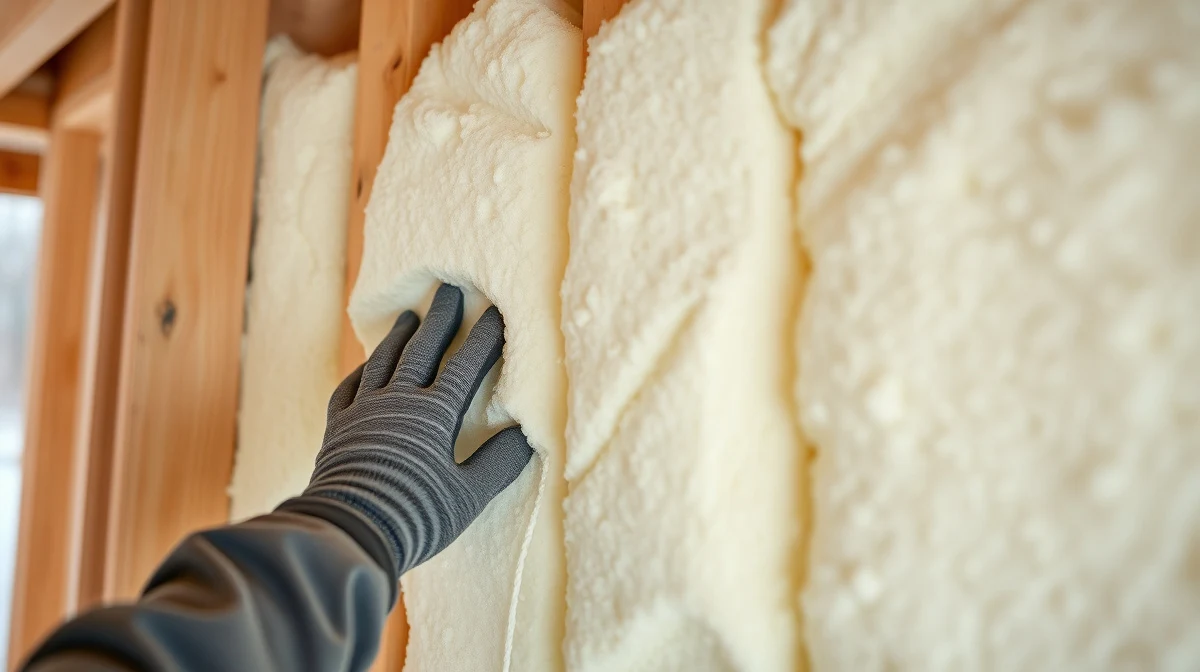
Pinetop-Lakeside sits roughly 6,800 to 7,200 feet up in the White Mountains, in IECC Climate Zone 5B — a genuine cold-winter classification, not the desert baseline most 'Arizona insulation' advice is written for. That means attic assemblies are typically targeted in the R-49 to R-60 range and walls around R-20, with air-sealing treated as seriously as raw R-value. Open-cell spray foam earns its place in that assembly by doing something fiberglass batts and blown cellulose can't: it expands to fill every irregular gap around wiring, plumbing, and framing, then cures into a continuous air barrier in the same pass. That air-sealing is what actually stops the heat loss and drafts that batts alone let slide through, even when the R-value on the bag looks similar on paper.
Where open-cell shines specifically is inside the conditioned envelope — interior partition walls, conditioned (not vented) attic spaces, and any assembly that stays dry and isn't exposed to ground moisture or exterior weather. At roughly R-3.5 to R-3.7 per inch, it doesn't carry the same density or per-inch R-value as closed-cell foam, but it costs less per board foot, and its open-cell structure absorbs sound in a way closed-cell simply doesn't. For a mechanical room next to a bedroom, a loft over a great room, or an interior wall between a garage and living space, that sound-dampening matters as much as the thermal number. Knowing when open-cell is the right tool and when a Pinetop-Lakeside home's moisture exposure calls for closed-cell instead is exactly what a free on-site assessment sorts out before any foam gets sprayed.
Why homeowners choose it
- Expands to fill irregular framing cavities completely, closing the small gaps around wiring and plumbing that batts always leave behind.
- Air-seals and insulates in a single application, addressing the draft and heat-loss pathways that drive up winter heating costs at elevation.
- Delivers meaningfully better sound dampening than closed-cell or batt insulation, ideal for interior walls and lofts common in mountain-cabin layouts.
- Costs less per board foot than closed-cell foam, making whole-interior-wall coverage more budget-friendly on larger retrofit projects.
- Cures rigid enough to stay in place for decades without settling, sagging, or losing R-value the way older fiberglass installations do.
- Applies cleanly to conditioned attic undersides and interior partitions, supporting a tighter, more consistent whole-house air seal.
Where Open-Cell Fits in a White Mountains Assembly
At Pinetop-Lakeside's elevation, the local code climate expectation pushes attic assemblies toward R-49 to R-60 and walls toward R-20 or better, with genuine attention paid to air leakage — noticeably stricter than what's assumed in Phoenix or Tucson. Open-cell foam can absolutely contribute to hitting those numbers, but it does its best work in locations that stay dry and stay inside the conditioned envelope — interior stud walls, conditioned attic decks, and interior ceiling assemblies. Because open-cell is vapor-open rather than a moisture barrier, it's not the right choice anywhere exterior moisture, snowmelt, or ground water intrusion is a realistic risk.
That's the dividing line we walk every Pinetop-Lakeside homeowner through on-site: open-cell for interior, dry, conditioned space; closed-cell for exterior walls, crawl spaces, and any assembly exposed to moisture. Getting this split right on paper is one thing — getting it right in your specific framing, at your specific elevation and exposure to sun and shade under the pines, is why the on-site assessment happens before any spray gun comes out.
- Interior walls and partitions: open-cell for sound control and air-sealing
- Conditioned attic decking: open-cell where the space stays dry and fully conditioned
- Exterior walls: closed-cell generally preferred for moisture and rigidity
- Crawl spaces and foundations: closed-cell required given ground moisture exposure
- Vented or shaded attics with moisture risk: closed-cell or a hybrid approach
Sound Dampening: A Real Factor in Cabin & Loft Layouts
Thermal performance gets most of the attention on a Pinetop-Lakeside insulation job, but open-cell foam's open-air structure is also a genuinely effective sound absorber — noticeably better than closed-cell foam's dense, rigid cell structure, and far better than an empty or batt-filled stud bay. Many White Mountains cabins and mountain homes use open loft layouts, shared walls between a primary suite and a laundry or mechanical room, or converted guest spaces where that difference is immediately audible once the foam cures.
This is a common add-on for homeowners already scheduling attic or wall work elsewhere in the house: since the crew and equipment are already on-site, adding open-cell coverage to a handful of interior walls is a relatively efficient upsell that solves a comfort problem batts were never designed to address. It's also a frequent standalone request from owners dealing with a noisy mechanical room or a shared wall in a duplex or guest-cabin conversion.
What the Installation Actually Involves
Open-cell spray foam is applied wet and expands rapidly — often 100 times its liquid volume — filling the full depth of the stud or rafter cavity in a single pass, then gets trimmed flush to the framing before drywall goes up. Because it expands so aggressively, it fills the small gaps around outlet boxes, top and bottom plates, and wiring penetrations that fiberglass batts routinely miss, which is where the real air-sealing benefit comes from rather than the R-value number alone.
A typical interior-wall or conditioned-attic open-cell job in a Pinetop-Lakeside home can usually be completed in a single day, with a required off-site or ventilated cure period before the space is reoccupied. We'll confirm exact scope, square footage, and cure-time expectations during your free on-site assessment — every home's framing, existing insulation, and access points are different enough that a firm number only comes after we've actually seen the space.
Ideal for
- Interior partition walls where sound dampening between rooms is a priority alongside thermal performance.
- Conditioned (unvented) attic assemblies that stay dry and are fully inside the building's thermal envelope.
- Cabin and second-home owners retrofitting interior walls around bedrooms or lofts for noise control.
- New-construction interior framing where budget favors open-cell coverage over full closed-cell application.
- Mechanical rooms, laundry rooms, and shared walls where equipment noise needs to be contained.
What affects the cost
Open-Cell Foam questions, answered
Not on its own. Open-cell works well on interior walls and conditioned attic spaces that stay dry, but our elevation and climate call for closed-cell on exterior walls and crawl spaces where moisture and structural rigidity matter. Most whole-home jobs use both, applied where each performs best.
Open-cell spray foam runs roughly R-3.5 to R-3.7 per inch, lower than closed-cell's R-6 to R-7 per inch but still a meaningful step up from real-world fiberglass performance once air-sealing is factored in. We calculate exact cavity depth and target R-value together during your on-site assessment.
Yes — its open-cell structure absorbs sound noticeably better than closed-cell foam or fiberglass batts, which is why it's a common choice for interior walls around bedrooms, lofts, and mechanical spaces even when thermal performance isn't the primary concern.
Only in a conditioned (unvented) attic assembly that stays dry and fully inside the thermal envelope. Vented attics or any space with real moisture exposure need closed-cell foam or a different approach — we'll confirm which assembly type your home has before recommending either.
Yes, open-cell generally costs less per board foot than closed-cell, which is part of why it's the practical choice for larger interior-wall coverage. Installed spray foam pricing typically runs $1.50-$5.00 per square foot depending on foam type and scope — we'll give you a firm number after seeing your home.
Open-Cell Foam done right, by a local Pinetop-Lakeside crew
Open-Cell Foam isn't a commodity — the result depends entirely on how carefully it's planned and installed for your specific home or cabin and Pinetop-Lakeside's real high-country climate. We assess what your property actually needs, prep and air-seal properly, and install to your elevation-appropriate R-value target, so the work delivers the comfort and savings it's supposed to.
We serve Pinetop-Lakeside, Show Low, Linden, McNary, Hon-Dah/Whiteriver, Pinedale, Heber-Overgaard, Greer, and Eagar/Springerville. Every job starts with a free, no-pressure quote.
Just as important, we treat your home or cabin like the system it is. Insulation, air sealing, and ventilation all interact, and getting one right while ignoring the others leaves comfort and savings on the table. When we scope your open-cell foam, we look at how it fits the whole picture — so the finished result performs the way it should, holds up through a genuine White Mountains winter, and actually lowers the bills you feel every month.
Free assessment
We evaluate your home or cabin and give you a clear, itemized quote.
Expert install
We prep, air seal, and install your open-cell foam to spec — clean and on schedule.
Savings you can feel
A warmer home, lower heating bills, and honest advice about what your property needs.
Related services
Ready for a free open-cell foam quote?
Tell us about your home and we'll put together a clear, no-pressure spray foam insulation quote — built for Pinetop-Lakeside's real winters.