Protecting Your Pinetop-Lakeside Cabin From Winter Pipe Freezes
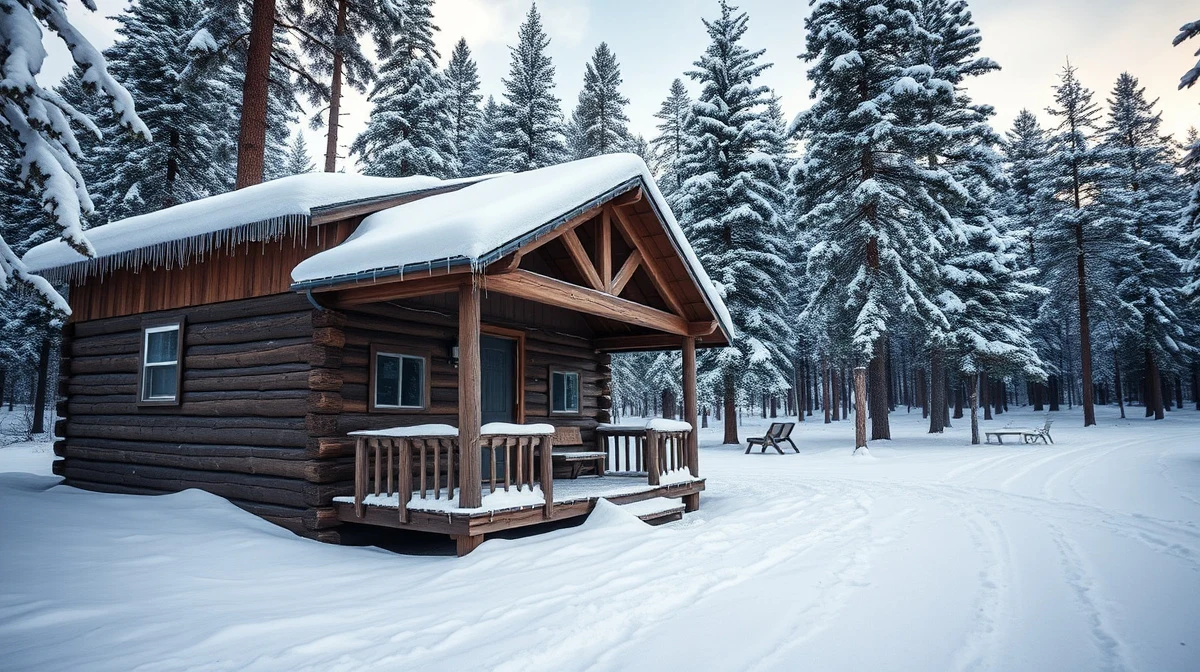
Walk through almost any neighborhood in Pinetop-Lakeside in January and you'll notice something a lot of full-time mountain towns don't have: a meaningful share of dark, quiet houses. This is a vacation and second-home market as much as it's a year-round community, and a large number of White Mountains cabins sit closed up, unheated, or only lightly monitored for weeks or months at a stretch through the coldest part of winter. That's exactly the situation where a frozen pipe turns into a genuinely expensive disaster — not because the cold itself is unusual for this elevation, but because nobody's there to catch the problem before it becomes a flooded crawl space, a ruined subfloor, or a burst line that runs for days before anyone notices.
Why Seasonal Cabins Are More Exposed to Freeze Risk
A full-time, occupied home has a built-in early warning system: someone's there to notice a cold room, a dripping faucet used to keep water moving during a hard freeze, or a furnace that's stopped keeping up. A closed-up cabin has none of that. If the crawl space or attic isn't properly insulated and air-sealed, and a pipe freezes and splits during a cold snap, the water often keeps flowing — sometimes for days or weeks — until someone finally checks on the property or a neighbor notices water damage from outside.
This risk compounds with the fact that a lot of Pinetop-Lakeside's cabin-era housing stock was built decades ago, often to a much lower insulation standard than current cold-climate expectations, and sits on raised foundations or crawl spaces rather than a slab. An under-insulated crawl space beneath an empty, unheated cabin can drop close to outdoor temperature during a sustained cold stretch, putting every water line, drain trap, and shutoff valve routed through that space directly at risk.
What Actually Reduces the Risk
There's no single fix that eliminates freeze risk entirely in a property that isn't being actively heated and monitored, but a combination of building-envelope improvements and proper winterization practices meaningfully reduces it. Spray foam insulation plays a specific, well-defined role in that combination.
- Insulate and air-seal the crawl space perimeter with closed-cell spray foam, targeting R-30 or better, so the space beneath the home holds temperature much longer during a hard freeze than an unsealed, vented crawl space ever could.
- Seal and insulate the attic to a strong R-49-60 target, since attic heat loss (even in a home kept at a low maintenance temperature) drives down the overall thermal performance of the building.
- Insulate exterior and rim-area wall cavities where plumbing runs close to an outside wall, reducing the localized cold spots where a pipe is most likely to freeze first.
- Keep a low but consistent heat source running rather than shutting the system off entirely, so the building envelope has something to hold onto during extended vacancy.
- Combine insulation improvements with traditional winterization steps — draining exposed exterior lines, insulating any pipe runs that can't be moved into conditioned space, and using a remote temperature monitor to get an alert if indoor temperature drops toward freezing.
Why the Crawl Space Is Usually the First Priority
Of all the building-envelope work we do on seasonal Pinetop-Lakeside cabins, crawl space insulation and air-sealing tends to deliver the most direct freeze-protection value for the investment. That's because most residential plumbing runs through or near the crawl space at some point — supply lines, drain lines, and often a water heater — and a vented, unconditioned crawl space is usually the coldest part of the building envelope, sitting closest to outdoor air temperature with the least protection.
Closed-cell spray foam applied to the crawl space perimeter walls and the rim area where framing meets the foundation closes off that cold path in a single application, rather than relying on fiberglass batts that sag, gap, and lose effectiveness over time. Combined with a sound ground vapor barrier, a properly foamed crawl space holds noticeably more heat through a cold snap than an unsealed one, buying real time before pipes anywhere near that space are at genuine risk.
The Attic Matters Too, Even in an Unoccupied Cabin
It's tempting to think attic insulation only matters when a house is actively heated and occupied, but even a cabin kept at a minimal maintenance temperature over winter loses a disproportionate amount of that heat straight up through an under-insulated, poorly air-sealed attic. A well-sealed attic, targeting R-49 to R-60 with the air-leakage gaps around can lights, top plates, and the attic hatch properly closed, helps whatever heat source is running actually hold the building at a safer temperature instead of bleeding it out through the ceiling plane all winter.
A Realistic Plan for a Pinetop-Lakeside Second Home
If you own a cabin or second home here and you're not on-site through the coldest stretches of winter, the strongest approach combines building-envelope work with basic monitoring and winterization discipline: get the crawl space and attic properly insulated and air-sealed, keep a low-set heat source running rather than shutting it off completely, insulate or drain any exposed exterior plumbing, and put a remote temperature or leak sensor in place so you (or a local property manager) get an alert before a small problem becomes a flooded crawl space discovered weeks later.
None of this is complicated, but it does take actually doing it before the first hard freeze of the season, not after. A free on-site assessment is the fastest way to find out exactly where your specific cabin is most exposed and what a realistic, prioritized plan looks like.
Frequently asked questions
Crawl space spray foam projects generally fall in the same $1.50-$5.00 per square foot installed range as other spray foam work, with total cost depending on square footage, height, access, and whether existing insulation needs removal first. A free on-site assessment gives you a firm number for your specific cabin.
It significantly reduces the risk but isn't a complete substitute for basic winterization practices. The strongest approach combines a well-insulated, air-sealed crawl space and attic with a low-set running heat source, insulated or drained exposed plumbing, and ideally a remote temperature or leak monitor for extended vacancies.
Yes — even at a minimal maintenance heat setting, an under-insulated, poorly air-sealed attic lets a disproportionate amount of heat escape, making it harder for whatever heat source is running to keep the rest of the building above freezing. Attic sealing is a meaningful part of an overall freeze-protection plan, not just a comfort upgrade for occupied homes.
Yes — many of our Pinetop-Lakeside clients are part-time or out-of-town owners. We can coordinate access with a local property manager, caretaker, or neighbor, and walk you through findings and recommendations by phone or email after the on-site assessment.
Ready for a free quote?
Tell us about your home or cabin and we'll build a clear, no-pressure quote.