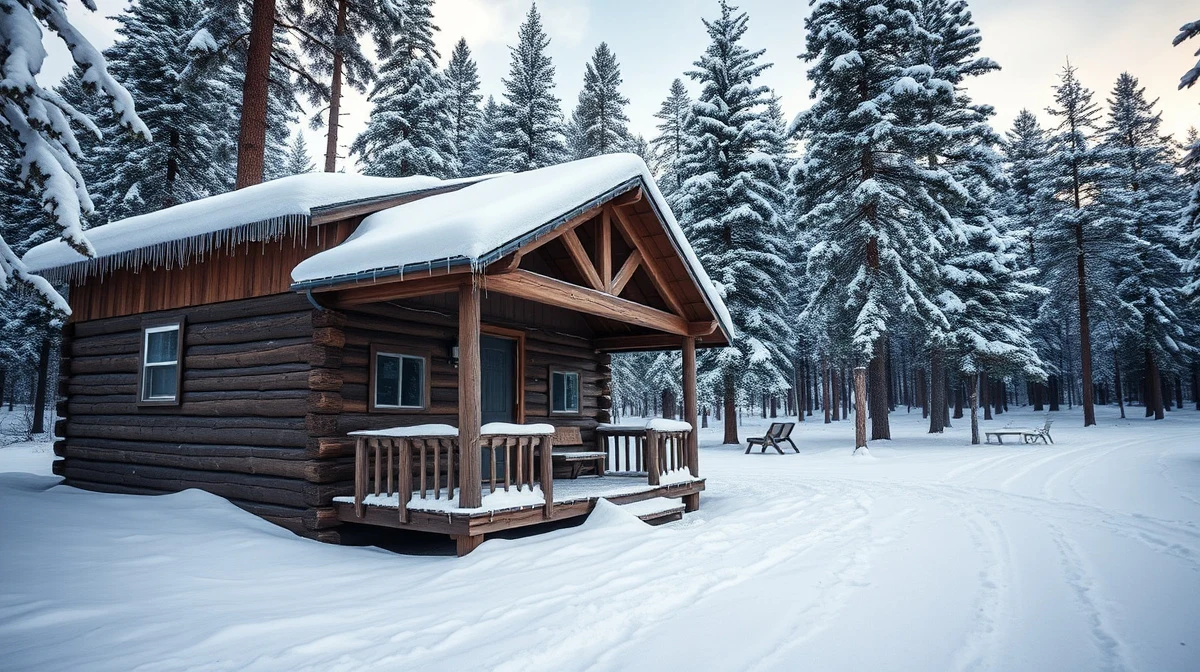
Spray Foam Insulation Cost Guide for Pinetop-Lakeside, AZ Homes (2026)

If you've priced insulation contractors in Pinetop-Lakeside and gotten wildly different numbers, you're not imagining things. Spray foam pricing genuinely varies more than fiberglass or blown cellulose because it depends on which area of the home you're treating, whether the job calls for open-cell or closed-cell foam, how much existing insulation has to be worked around, and — specific to this market — how much material it takes to hit the R-values a home at roughly 6,800 to 7,200 feet actually needs to perform through a real White Mountains winter.
This guide breaks down real-world cost ranges by area of the home, explains why open-cell and closed-cell foam price out differently, and walks through the math homeowners actually care about: how spray foam costs stack up against what you're currently paying to heat a drafty, under-insulated house or cabin through a Pinetop-Lakeside winter. Every number here is a typical range, not a quote — your home's framing, access, existing insulation condition, and target R-value all move the final price, which is exactly why we push toward a free on-site assessment before anyone commits to a number.
Why Pinetop-Lakeside Costs Don't Match Generic "Arizona" Insulation Pricing
Most spray foam pricing content written for "Arizona" is really written for Phoenix, Tucson, or the Valley — desert climates in IECC Zone 2B where the insulation job is about keeping summer heat and AC load out. Pinetop-Lakeside sits in IECC Climate Zone 5B at roughly 6,800 to 7,200 feet, a genuinely cold, high-elevation mountain climate with a real winter snow season. The building-science job here is the reverse: keeping heat inside the house and reducing the attic-heat-loss cycle that can cause ice buildup along the eaves.
That difference shows up directly in cost. A cold-climate assembly appropriate for this elevation calls for attic insulation targets around R-49 to R-60 (versus roughly R-38 in Phoenix), wall assemblies around R-20 or better, and crawl space or foundation insulation at R-30 or higher where a Phoenix slab-on-grade job wouldn't need perimeter foam at all. Hitting those higher targets simply takes more spray foam material per square foot than a comparable desert-zone job — one of the biggest reasons a straight "per square foot" number pulled from a low-desert source will undershoot what a Pinetop-Lakeside home actually needs.
Spray Foam Insulation Cost by Area of the Home
Spray foam is typically priced per square foot installed, but the effective cost per square foot changes a lot depending on which assembly you're insulating, the thickness of foam required to hit target R-value, and how easy or difficult that area is to access. Below are realistic ranges for the areas we install most often in Pinetop-Lakeside and White Mountains homes and cabins.
Attic Spray Foam Insulation Cost
Attics are the single biggest lever for stopping heat loss and reducing ice-dam risk, and they're usually the largest line item on a whole-home spray foam project. For a roof-deck or conditioned-attic application targeting a strong R-49 to R-60 range, most Pinetop-Lakeside attic projects land somewhere between $2,500 and $7,500 total, with the wide spread driven almost entirely by square footage, roofline complexity, and whether closed-cell foam is used at the roof deck for its higher R-value per inch and moisture performance. A straightforward attic on an average home often falls in the middle of that range; larger homes, complex rooflines, or attics that also need old insulation removed before foam goes in trend toward the higher end.
Wall Spray Foam Insulation Cost
Wall insulation pricing depends heavily on whether the walls are open (new construction or a gut remodel) or closed (injection work in an existing finished wall). Open-wall applications, where foam is sprayed directly into stud bays before drywall goes up, are generally more cost-efficient per square foot than closed-wall retrofit work, which requires small access holes and more labor per square foot of coverage. To meet a genuine cold-climate wall target of roughly R-20 or better, most whole-house wall projects run in the same general $1.50-$5.00 per square foot installed range as other spray foam work, with closed-cell chosen more often here because it hits higher R-value in the limited depth of a standard 2x4 or 2x6 wall cavity.
Crawl Space Spray Foam Insulation Cost
A meaningful share of White Mountains homes and cabins sit on raised foundations and crawl spaces rather than slab-on-grade, so this is one of the highest-value freeze-protection projects we do in this climate. Crawl space work is priced by square footage of foundation wall and/or subfloor being treated, targeting a recommended R-30 or better performance. Total project cost is driven by crawl space size, height and access (a low, cramped crawl space takes longer to work in than a walk-in space), and whether there's existing moisture, old insulation, or debris that needs to be dealt with first. Closed-cell foam is the standard choice here because it also acts as a moisture barrier against ground dampness and snowmelt intrusion, not just an insulation layer.
Open-Cell vs. Closed-Cell: Why the Price Difference Exists
Across the whole spray foam category, installed pricing generally runs from about $1.50 to $5.00 per square foot, with open-cell foam sitting at the lower end of that range and closed-cell foam at the higher end. That spread isn't arbitrary — it comes down to density and R-value per inch. Open-cell foam expands to a lighter, softer density and delivers roughly R-3.5 to R-3.7 per inch, which means it costs less per board-foot but needs more material thickness to hit a given R-value target. Closed-cell foam is a denser, more rigid product that delivers roughly R-6 to R-7 per inch — nearly double the R-value per inch of open-cell — along with a built-in moisture and vapor barrier and added structural rigidity.
In a cold, high-elevation Zone 5B climate like Pinetop-Lakeside's, that R-value-per-inch difference matters more than it would in a mild climate, because hitting strong cold-climate targets — R-49 to R-60 in an attic, R-20-plus in a wall, R-30-plus in a crawl space — inside a limited framing depth often pushes the choice toward closed-cell, especially in crawl spaces and 2x4/2x6 wall cavities where there simply isn't room for enough open-cell foam to get there. Open-cell still has a strong place in this market: it's a good fit for interior wall sound-dampening and for conditioned attic applications where framing depth isn't a constraint and moisture control from the outside isn't the primary concern. The right call between the two comes down to which assembly you're insulating, how much depth is available, and whether moisture and vapor performance is part of the job — which is exactly what an on-site assessment sorts out before you commit to a number.
Cost Drivers Specific to Pinetop-Lakeside's Climate and Housing Stock
A few things push Pinetop-Lakeside spray foam pricing in a different direction than a Phoenix or Tucson quote for a similarly sized home, and it's worth understanding them before you compare bids.
- Higher R-value targets mean more material. A strong cold-climate assembly here calls for roughly R-49-60 in the attic and R-20-plus in the walls, versus lower statewide desert-zone minimums — hitting those numbers simply requires more spray foam thickness (and therefore more material cost) per square foot than a desert-zone job.
- A larger share of raised foundations and crawl spaces. Unlike the slab-on-grade construction common in low-desert Arizona, much of the White Mountains housing stock sits on crawl spaces or piers, adding a line item that a Phoenix job typically doesn't have at all.
- Older cabin-era housing stock. Pinetop-Lakeside has a significant number of older cabins and vacation homes built well before current cold-climate insulation expectations existed, often needing existing insulation removed before new foam goes in.
- Roofline and access complexity. Forested lots, steep-pitched roofs sized for real snow load, and older framing conventions can mean more valleys, dormers, and cut-up attic space to work around than a typical flat-roofed desert production home.
- Access and site conditions. Winter installation windows and crawl spaces built without cold-climate detailing can add time to a job compared to a warm-climate equivalent.
- Seasonal occupancy considerations. Scheduling around a part-time cabin owner's availability, or working in a property that's been closed up and unheated, can affect logistics on some projects.
Cost vs. Savings: The Heating-Bill Math
The number homeowners actually care about isn't the installed cost in isolation — it's how that cost compares to what they're already paying to heat a home that's losing warm air through an under-insulated attic, drafty walls, and an uninsulated crawl space all winter. Pinetop-Lakeside homes on electric or propane heat see their bills climb hard through the cold season, and a poorly insulated, poorly air-sealed house is effectively paying to heat the attic space and the outdoors along with the living space.
Here's the mechanism: fiberglass batts and blown cellulose only slow heat transfer — they don't stop air movement, and in a home with real air leakage (common in Pinetop-Lakeside's older housing stock especially), warm conditioned air is constantly escaping through gaps around top plates, can lights, plumbing penetrations, and the attic hatch, while cold air infiltrates from outside. Spray foam insulates and air-seals in the same application, which is the real reason it outperforms fiberglass or cellulose of a similar R-value on an actual heating bill — it's not just slowing conduction, it's stopping the air exchange that conduction-only insulation can't touch.
Running the math in general terms: a home with a properly air-sealed, spray-foamed attic at R-49-plus and a sealed crawl space is no longer constantly losing conditioned air to the attic and the space beneath the floor, which is where a large share of a Pinetop-Lakeside home's winter heat loss typically originates. Homeowners who've had attic and crawl space work done commonly see a meaningful drop in the heating portion of their utility bill starting the first full winter after installation, though the exact percentage depends on the home's prior insulation condition, air-leakage rate, square footage, and heating system efficiency — which is why we don't publish a single guaranteed savings percentage and instead walk through your actual bills and home condition during the assessment.
Financing and ROI Framing
Spray foam insulation is a durable-goods home improvement, not a consumable, and it's reasonable to think about the cost the same way you'd think about a furnace replacement or a new roof — as an investment with a payback period, not just an expense. Because spray foam both insulates and air-seals permanently (it doesn't settle or lose R-value the way blown cellulose or fiberglass can over years), the winter heating-cost savings it produces continue every year the home is occupied, not just in year one.
For homeowners weighing whether to do a full attic-plus-crawl-space-plus-wall project at once versus phasing it in, the attic and crawl space work generally deliver the fastest payback because they address large sources of heat loss and freeze risk. Ask about current financing options during your assessment so the upfront cost isn't a barrier to getting the work done before the next heating season.
Getting an Accurate Number for Your Home
Every range in this guide is a real, typical range pulled from White Mountains-area jobs — but your home's actual price depends on things a blog post can't see: your attic's square footage and roofline complexity, whether your walls are open or closed, your crawl space's height and access, the condition of any existing insulation, and which combination of open-cell and closed-cell foam makes sense for your specific assemblies. Two homes of the same square footage in the same Pinetop-Lakeside neighborhood can land at meaningfully different total costs once those factors are accounted for.
Frequently asked questions
Most spray foam projects fall in a range of about $1.50 to $5.00 per square foot installed, with total attic projects commonly running $2,500 to $7,500 depending on size and target R-value. Wall and crawl space pricing varies based on access and assembly type — a free on-site assessment is the only way to get a firm number for your home.
Yes, closed-cell foam generally costs more per square foot than open-cell because it's denser and delivers roughly R-6 to R-7 per inch versus open-cell's R-3.5 to R-3.7 per inch. In Pinetop-Lakeside's cold, high-elevation climate, that higher R-value per inch is often worth it in crawl spaces and limited-depth wall cavities where hitting strong cold-climate R-values requires more R-value packed into less space.
Homes with properly air-sealed, spray-foamed attics and crawl spaces typically see a meaningful drop in winter heating costs because spray foam stops both heat conduction and air leakage — the combination that drives most winter heat loss in an under-insulated home. The exact savings depend on your home's current insulation condition and air-leakage rate, which we assess on-site.
A genuine cold-climate assembly at this elevation calls for higher R-values than Phoenix — roughly R-49-60 in the attic versus R-38, and wall assemblies with more R-value, plus crawl space insulation that a Phoenix slab-on-grade home wouldn't need at all. Meeting those higher targets takes more spray foam material and more careful air-sealing per square foot than a desert-zone job typically requires.
No — these are typical ranges based on real Pinetop-Lakeside-area jobs, not a quote for your specific property. Your final cost depends on square footage, roofline or crawl space complexity, existing insulation condition, and which foam type fits each assembly. A free on-site assessment is the only way to get an accurate number.
Financing options are commonly available for larger whole-home projects covering attic, wall, and crawl space work together, which can make it easier to complete the full job before the next heating season instead of phasing it over multiple years. Ask about current financing options during your on-site assessment.
Ready for a free quote?
Tell us about your home or cabin and we'll build a clear, no-pressure quote.